Architecture
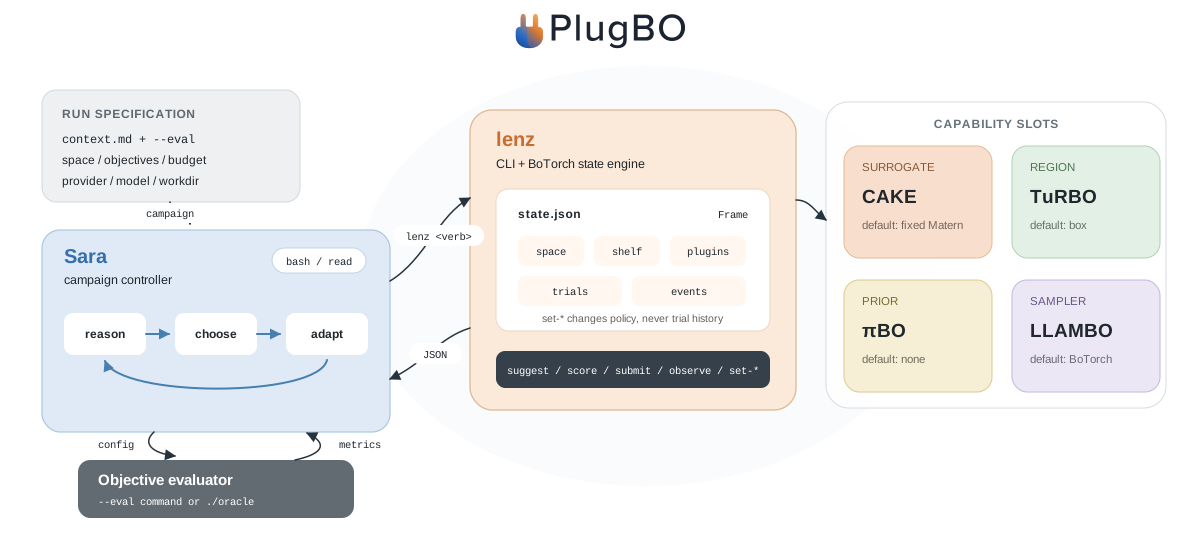
Sara, lenz, and the BO methods are the same kind of piece: modules on one control plane.
- Sara is the host. It has two tools,
bashandread, and reasons over trial data, surrogate diagnostics, and natural-language context to decide how to search next. - lenz is the shared tool surface, a BoTorch backend that owns the trial log and posterior computation. It is independently usable without an agent (see the vanilla loop).
- BO methods (CAKE, TuRBO, πBO, LLAMBO) occupy slots on lenz: surrogate, region, prior, sampler.
This is analogous to MCP: Sara is the host, lenz is the shared tool surface, and a BO method registers extra verbs there the way an MCP server registers tools. The agent itself stays fixed — only the surrogate, region, prior, or sampler changes as methods are plugged in.
Why keep the agent fixed?
Restricting Sara to bash and read — instead of growing a bespoke tool for
every new BO method — means:
- New capability is added as a
lenzverb, not a second agent or a new tool schema Sara has to be taught. - Method state stays inside
lenz'sstate.json(frame.plugins), not scattered across the agent's context. - Reconfiguring a slot never discards trials — the trial log and posterior are lenz's responsibility, independent of which plugins are active.
Where state lives
- The trial log, posterior, and objectives live in
lenz'sstate.json. - Each active plugin stores its own blob under
state.json'spluginskey. - Sara's conversation only ever sees what
lenzandreadreturn — plugin internals (e.g. CAKE's kernel-evolution trace) are not part of the agent's context unless a command surfaces them.
See Plugins for the slot model in detail, and the plugin reference pages for what each specific method does.